Terumo Neuro: Pilot-Line Fixtures
Deployed
Raised razor blade life from 3 cuts to 15 and cut tack-weld cleaning time 89%. Designed and deployed 5+ resin-printed (SLA) fixtures on the pilot line for a new neurovascular catheter.
Labels, product names, and part numbers blurred under NDA.
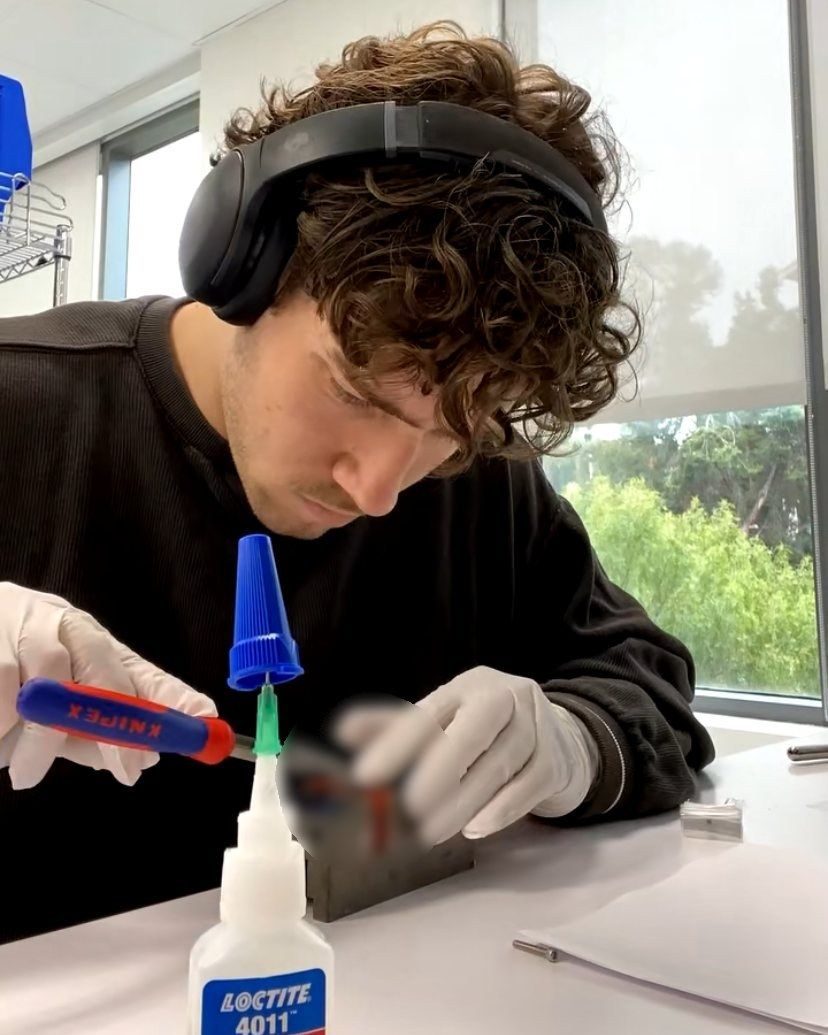
My role.Designed each fixture, then assembled and tested it on the floor with the technicians who use it.
Problem
The original cutting fixture wore through a razor blade every 3 cuts, and weld spatter stuck to the tack-welding fixture.
Fixture design
5+ fixtures for cutting, tack welding, and valve press-fitting, each developed with technician and operator input. Modeled in SolidWorks, built by SLA (stereolithography) resin printing and machining, and revised through ECNs in the PLM system.
Cutting fixture
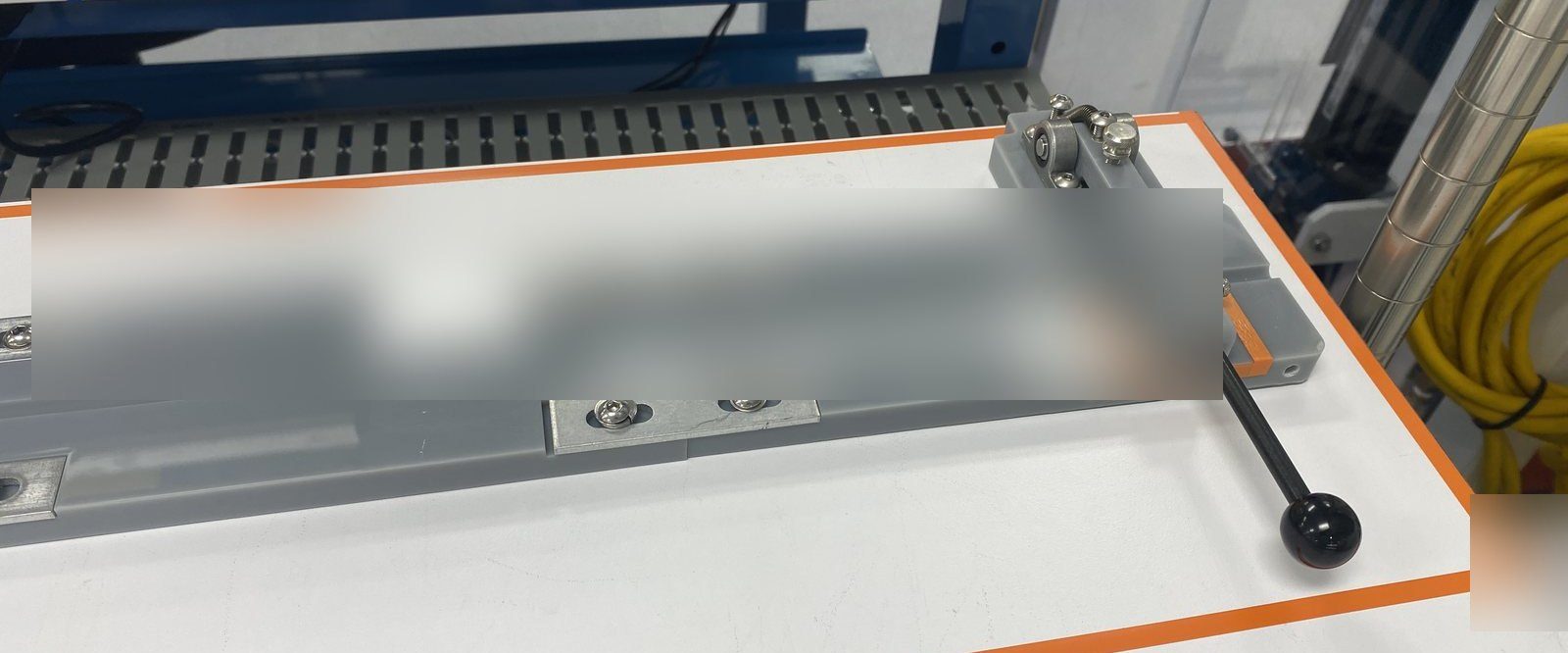
- Rebuilt the dilator cutting fixture around a more durable razor standard, with a toggle that flips between the two cut lengths instead of a full tooling swap
- Cut setup time while keeping positional accuracy and repeatability
Design rationale: fewer blade swaps are safer, save technician handling time, and raise throughput.
Tack-weld fixture
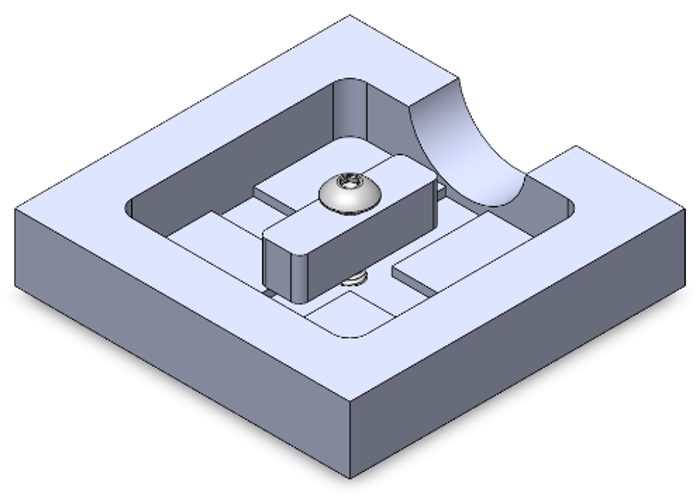
- Reworked the tack-welding fixture with machined copper inserts and grooved shafts so weld spatter would not stick
Design rationale: some weld spatter is inevitable, so the copper inserts let technicians tack weld at different sites on the fixture.
Process engineering
- Wrote and revised 9+ Manufacturing Process (MP) documents for transfer to an overseas line, adding observed failure modes, operator feedback, and updated fixture interfaces
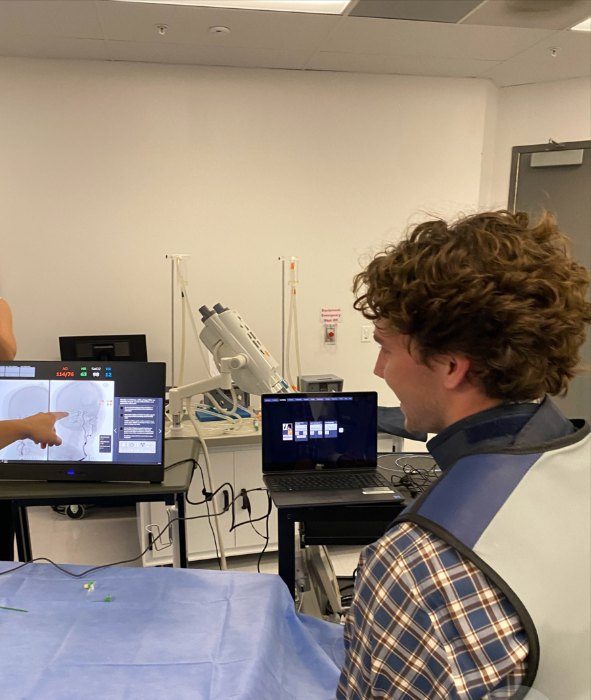
- Helped plan, set up, and interpret 20+ design-of-experiment (DOE) trials on a coating defect, correlating 9-point thermocouple data with defect locations across 6 input variables
- Ran thermal mapping validation of temperature uniformity on R&D and production ovens (thermocouple arrays, Keysight DAQ); presented results weekly to R&D, quality, and manufacturing
- Coordinated 25+ engineering change notices (ECNs) through Windchill
Status: the coating DOE was unfinished when my internship ended.
ToolsSolidWorks, SLA printing, Windchill PLM, ECNs, Design of experiments, Thermocouples, Keysight DAQ, Thermal mapping